Dogs in Fort Bend County are hard on natural grass, and Fort Bend County's soils make the problem worse. The clay-heavy ground throughout Sienna, Riverstone, Quail Valley, and the Sugar Land corridor holds moisture after rainfall, stays compacted under repeat foot traffic, and produces the muddy paw-print cycle that becomes a routine nuisance for homeowners with active pets. Natural grass in a dog-use area in this climate requires near-constant recovery effort — irrigation, overseeding, roping off sections to rest — and still ends up patchy within a season.
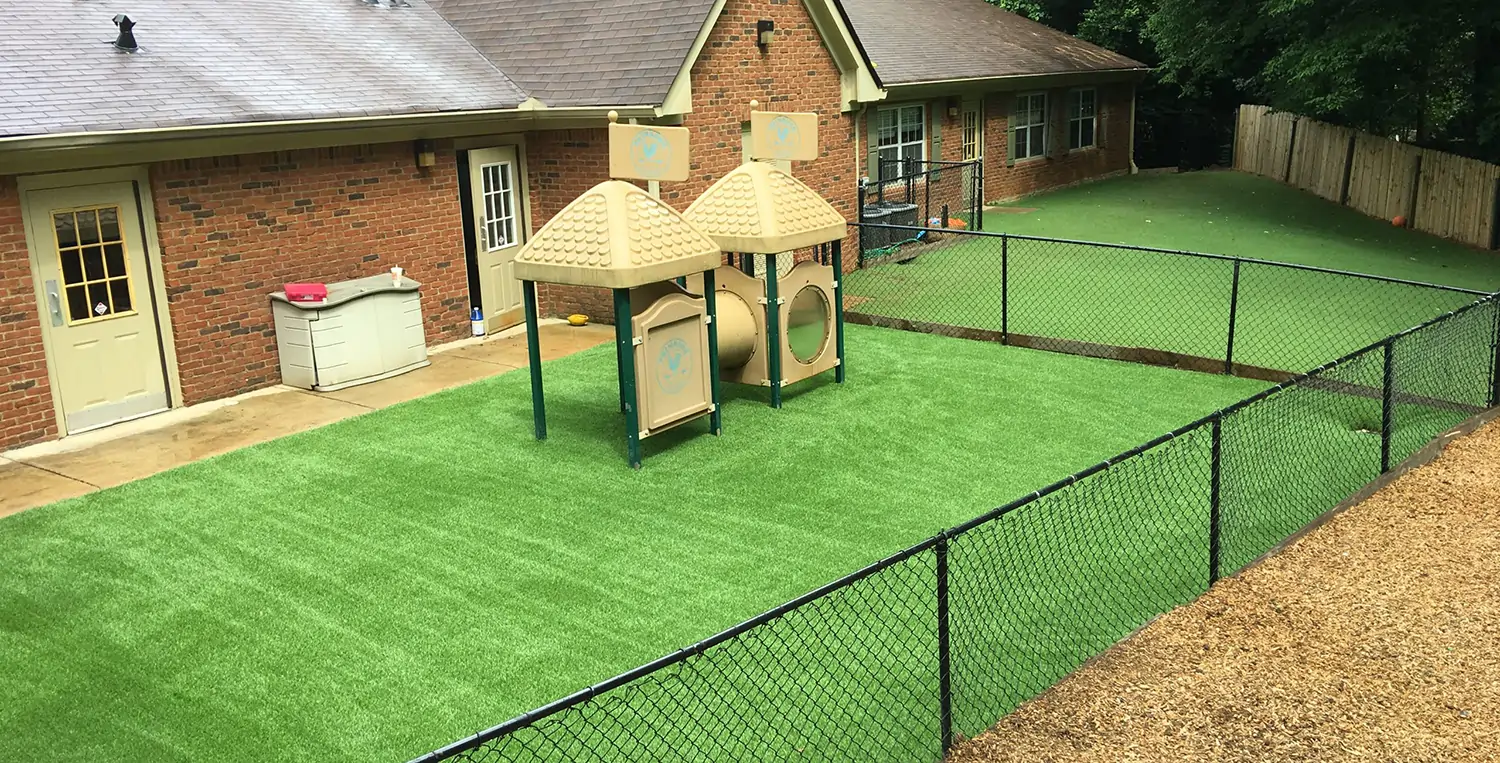
Pet-friendly artificial turf eliminates that cycle. The surface stays consistent regardless of how many times the dog runs the same path, does not produce mud during Fort Bend's rain events, and does not develop the bare areas that dogs create in natural grass through digging and repeated traffic. The challenge is that not all turf systems perform equally for pet use — the backing drainage rate, the infill selection, and the base preparation all determine whether the surface remains clean and hygienic or whether odors accumulate in the system over time.
Artificial Grass of Missouri City installs pet-friendly turf with the drainage-first mindset that Fort Bend County's conditions demand. The base preparation includes a permeable aggregate layer that allows pet waste liquids to move through the system quickly rather than pooling near the surface. The turf backing is specified for drainage rate appropriate to the pet load the yard will see — a yard with one small dog has different requirements than one with two large breeds. Infill selection can include antimicrobial-treated options that help manage odor over time. We discuss all of these variables during the site consultation before any product is specified.
For homeowners in Sienna's sub-villages where ARB landscaping rules apply, we provide documentation to support the approval process. For homes in Riverstone, First Colony, or Sugar Land's established subdivisions where HOA landscaping standards exist, we review those requirements before finalizing the installation plan. The goal is a surface that passes community standards, stays hygienic under daily pet use, and requires genuinely low maintenance — weekly hose-down in high-use zones and debris removal rather than the ongoing recovery cycle natural grass demands.